
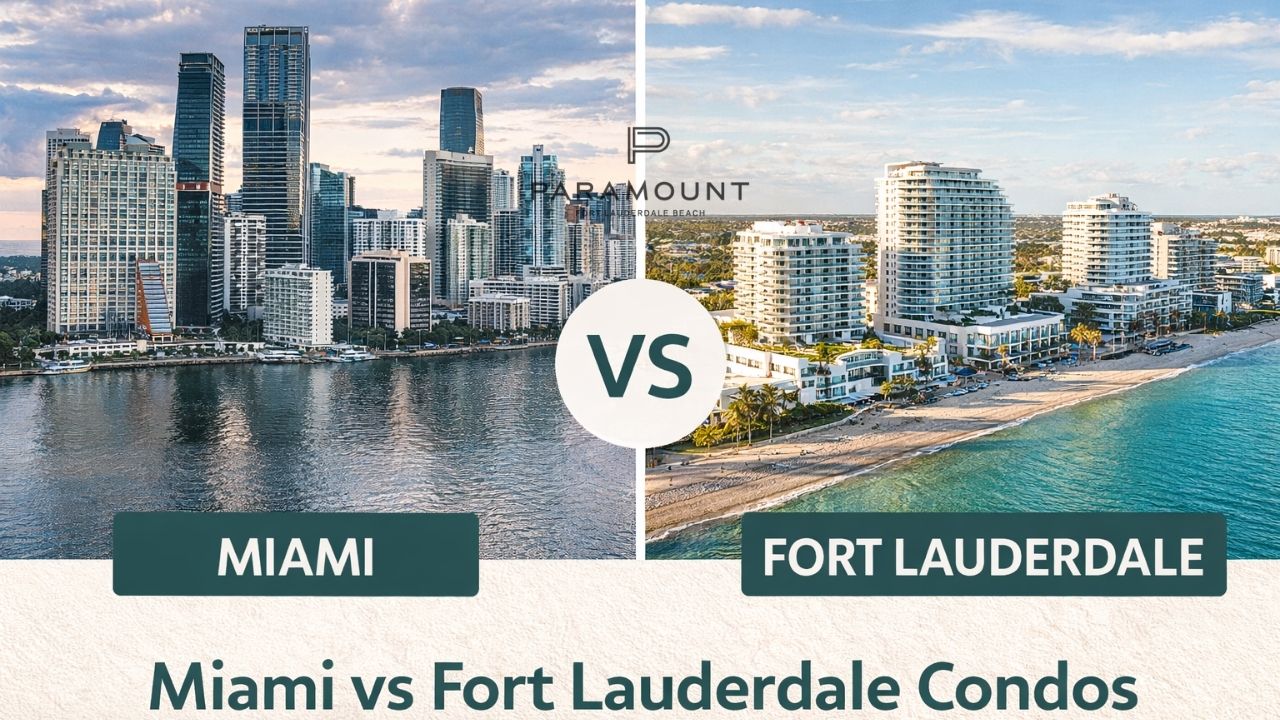
For investors focused on yield and entry value, Fort Lauderdale presents a compelling opportunity. For those prioritizing long-term appreciation and global prestige, Miami continues to lead, albeit at a significantly higher cost basis.
Two Markets, Two Investment Philosophies
Choosing between Miami and Fort Lauderdale isn’t about which city is “better.” It’s about understanding what each market is designed to deliver.
Miami operates as a global asset class. Capital flows into the city from Latin America, Europe, and beyond, often with motivations that extend beyond pure wealth preservation and currency hedging; international positioning also plays a role. That demand supports pricing that few U.S. markets can replicate.
Fort Lauderdale, by contrast, is still in the process of being fully recognized. Over the past several years, it has quietly transitioned from a secondary option into a serious destination for both lifestyle buyers and investors.
The pricing hasn’t fully caught up to that reality yet, which is precisely where the opportunity lies.
Rental Performance and Real-World Returns
From a purely financial perspective, Fort Lauderdale tends to produce stronger day-to-day performance.
The reason is straightforward: acquisition costs remain meaningfully lower, while rental demand particularly near the beach and Las Olas continues to strengthen.
The result is a healthier yield profile and, in many cases, a more forgiving margin after expenses.
Miami, on the other hand, often requires a longer view. Rental income is solid, particularly in core areas, but higher purchase prices and elevated carrying costs can compress short-term returns.
Investors entering Miami are typically doing so with appreciation in mind rather than immediate income.
Appreciation, Liquidity, and Market Depth
Where Miami distinguishes itself is in long-term positioning. Its global visibility creates a depth of demand that supports both pricing and liquidity.
In prime locations, appreciation has historically been strong, and the presence of international buyers provides a level of resilience that is difficult to replicate.
Fort Lauderdale’s trajectory is different but no less interesting. The city is mid-cycle, with significant infrastructure investment, corporate migration, and urban development still unfolding.
Appreciation has already been meaningful, but there is a strong argument that the market has not yet fully repriced.
For investors willing to enter before that adjustment is complete, Fort Lauderdale offers a different kind of upside: less about global prestige and more about timing and growth.
Cost Structure and Ownership Reality
One of the most overlooked distinctions between the two markets is the cost of ownership.
In Miami, luxury buildings frequently carry substantial HOA fees, and insurance and tax burdens have increased in recent years. These factors can materially affect net returns and should be carefully evaluated at the acquisition stage.
Fort Lauderdale generally offers a more favorable cost structure. While expenses remain significant, particularly in newer or beachfront developments, they are more manageable relative to the purchase price, improving overall investment efficiency.
Where Do Luxury Buyers Prefer to Invest?
- Miami attracts:
- International investors
- Ultra-high-net-worth buyers
- Prestige-focused purchases
- Fort Lauderdale attracts:
- Domestic professionals
- Lifestyle buyers
- Investors seeking value + upside
👉 Fort Lauderdale is increasingly becoming a luxury alternative to Miami.
Regulatory Considerations Every Buyer Should Understand
Any serious discussion of South Florida condos today must acknowledge the impact of post-2021 legislation following the Surfside condo collapse.
Reserve funding requirements and structural inspection mandates have fundamentally changed the landscape, particularly for older buildings.
In both Miami and Fort Lauderdale, underfunded associations are now facing substantial assessment costs that are passed directly to owners.
For buyers, this makes due diligence non-negotiable.
Reviewing reserve studies, financial statements, and upcoming capital requirements is no longer optional; it is central to the investment decision.
What Are the Risks in Each Market?
Miami Risks
- High HOA fees ($1,000–$1,800/month)
- More volatile (global capital dependent)
- Strict rental rules in many buildings
Fort Lauderdale Risks
- Smaller international buyer pool
- More dependent on the U.S. economy
- Still developing in some areas
Which Market Aligns With Your Strategy?
Miami tends to attract buyers who are thinking in terms of legacy assets, properties that hold value, signal status, and benefit from global demand over time. It is a market that rewards patience and capital strength.
Fort Lauderdale appeals to a slightly different profile. Investors here are often more focused on efficiency, maximizing return, managing risk, and entering a market that still has visible room to grow.
At the same time, many buyers are drawn to the lifestyle itself: a more relaxed coastal environment that doesn’t sacrifice sophistication.
FAQ’s
Is Fort Lauderdale still considered an emerging luxury market?
Yes. While it has already seen significant growth, many indicators suggest it is still in a transitional phase, with pricing not yet fully aligned with demand.
Are operating costs significantly higher in Miami?
In many cases, yes, particularly in newer luxury towers where HOA fees and insurance costs can materially affect net returns.
Which market is more stable long-term?
Miami benefits from international demand, which adds a layer of stability. Fort Lauderdale, while slightly more tied to domestic trends, is strengthening as its economic base expands.
Final Perspective
Both cities are viable. Both are growing. And both have earned their place in any serious South Florida investment conversation.
The difference is in what you expect the asset to do for you. If the objective is income, value, and entering a market before it fully peaks, Fort Lauderdale is difficult to ignore.
If the goal is long-term appreciation tied to a globally recognized market, Miami remains the benchmark.
Explore Fort Lauderdale Opportunities
For buyers who value timing and positioning, Fort Lauderdale is becoming increasingly difficult to overlook.
If you’re considering a beachfront residence or investment-grade property, Paramount Residences represents one of the most refined options currently available, offering privacy, design, and direct oceanfront living in a market that is still evolving.