
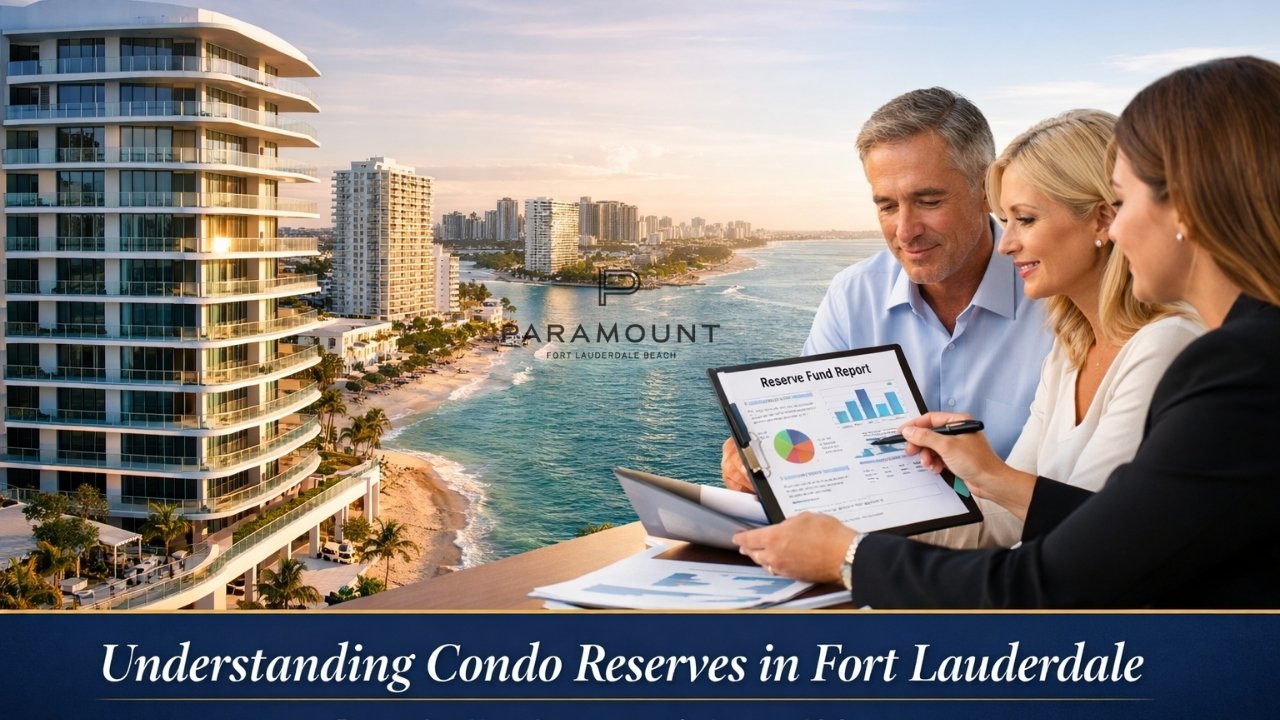
Luxury condo buyers in Fort Lauderdale often focus on views, finishes, and amenities. But the most important financial factor is usually hidden in the HOA documents: reserve funding. Condo reserves determine whether a building is financially prepared for future repairs or whether owners will face large assessments after closing.
For high-end buyers, this is not a minor detail. In coastal South Florida, reserve strength directly affects ownership costs, negotiation leverage, and long-term value.
What Are Condo Reserves?
Condo reserves are funds set aside by the HOA for major future repairs and capital improvements. These include structural repairs, façade restoration, elevators, roofs, waterproofing, and mechanical systems.
Buildings with strong reserves spread these costs over time through monthly fees. Buildings with weak reserves often issue large special assessments when repairs become unavoidable.
Why Condo Reserves Matter Specifically in Fort Lauderdale
Fort Lauderdale condos face unique cost pressures:
- Salt-air corrosion accelerates concrete and metal deterioration
- Hurricane exposure increases structural maintenance needs
- Many waterfront buildings are 20–40+ years old
- Luxury towers include complex mechanical systems
- Insurance costs and deductibles are rising
Because of these factors, reserve funding plays a larger role in Fort Lauderdale than in many other markets. Buyers who ignore reserves risk inheriting future capital costs.
How Condo Reserves Affect Your Purchase Price
Condo reserves influence your purchase in three key ways.
First, they determine whether future repairs are already funded. A lower purchase price in a poorly funded building may defer costs rather than reduce them.
Second, reserves affect negotiation. Sophisticated buyers adjust offers when upcoming repairs are known but unfunded.
Third, reserve levels influence financing and resale demand. Many lenders and future buyers prefer financially stable buildings.
What Is Considered a Strong Reserve Fund?
This is the most important question buyers ask. Industry benchmarks commonly used by lenders and analysts:
70%–100% funded
Financially strong. Major repairs are likely to be planned and funded.
40%–70% funded
Moderate. Buyers should carefully review upcoming capital projects.
Below 30% funded
Higher risk. Special assessments or fee increases are more likely.
In Fort Lauderdale, buyers should also compare funding to known upcoming repairs. A building with 60% reserves but major structural work pending may still require assessments.
What Buyers Must Check Before Buying a Fort Lauderdale Condo
High-net-worth buyers typically review financial documents before making an offer. The most important items include reserve funding levels, upcoming capital projects, and assessment history.
The reserve study reveals projected repairs and funding needs. A recent study is more reliable, especially in South Florida, where construction costs change quickly.
Meeting minutes often disclose planned concrete restoration, balcony repairs, or structural upgrades. These projects can significantly impact ownership costs.
Assessment history also matters. Buildings that rely on repeated assessments often lack proactive financial planning.
The insurance structure should also be reviewed. Large deductibles may require owner contributions after storms.
Together, these factors reveal whether reserves align with future capital needs.
Red Flags Fort Lauderdale Buyers Should Watch
Sophisticated buyers typically investigate further when they see:
- Reserves below 30% funded
- Recent large special assessments
- Deferred structural maintenance
- Rapid HOA fee increases
- Pending engineering reports
- Upcoming milestone inspections
- Aging waterfront buildings with limited funding
These signals don’t automatically eliminate a property, but they should influence pricing and due diligence.
Florida Condo Reserve Laws (SB 4-D and HB 5-D)
In 2022, Florida passed SB 4-D and HB 5-D, which significantly changed condo reserve requirements. These laws require milestone inspections and mandatory structural reserve funding for key components.
These components include:
- Roof
- Load-bearing walls
- Foundation
- Structural floors
- Fireproofing systems
- Plumbing systems
- Waterproofing
These rules affect many Fort Lauderdale buildings, particularly older coastal towers. Some associations are increasing reserves to comply, which may raise HOA fees but improves long-term financial stability.
Buyers should confirm whether a building has completed milestone inspections and, if so, update the reserve funding accordingly.
For official guidance, buyers can review materials from the Florida Department of Business and Professional Regulation, which publishes compliance information for associations.
Example: How Condo Reserves Impact a Luxury Buyer
A buyer purchases a Fort Lauderdale waterfront condo slightly below comparable sales. The building appears well-maintained, and HOA fees seem reasonable.
Six months later, the association announces concrete restoration and balcony upgrades. Reserves cover only part of the project, and owners receive a large assessment.
The buyer’s initial savings disappear. This is a common scenario when reserves are not reviewed before purchase.
How to Evaluate Condo Reserves Like a Sophisticated Buyer
Experienced buyers typically request financial documents early. These include the reserve study, annual budget, financial statements, and meeting minutes.
Reviewing these documents helps determine whether future capital projects are already funded. Many buyers also consult their agent or financial advisor to interpret the reserve funding in relation to upcoming repairs.
In Fort Lauderdale’s luxury market, this level of due diligence is standard practice.
FAQs
What are condo reserves?
Condo reserves are funds saved by the HOA for major repairs and capital improvements. They reduce the likelihood of special assessments.
What is a healthy condo reserve level?
Generally, 70%+ funded reserves are considered strong, 40–70% moderate, and below 30% higher risk.
Do Florida laws require condo reserves?
Yes. Florida SB 4-D and HB 5-D require structural integrity reserve funding and milestone inspections for certain buildings.
Can low reserves affect condo financing?
Yes. Some lenders review reserve funding when approving loans for condo purchases.
Do luxury condos always have strong reserves?
Not necessarily. Financial planning varies by association, making review essential.
How do I check condo reserves before buying?
Request the HOA budget, reserve study, financial statements, and meeting minutes.
Can low reserves lead to special assessments?
Yes. If reserves are insufficient, owners may be required to fund repairs through assessments.
Final Insight for Fort Lauderdale Luxury Buyers
In Fort Lauderdale, condo reserves are not just a financial detail; they define the long-term stability of your investment. Buildings with strong reserves tend to maintain value, minimize surprises, and support predictable ownership costs.
For buyers evaluating specific luxury properties, including Paramount Residences Fort Lauderdale, reviewing reserve funding, milestone inspection status, and planned capital improvements helps you understand the true cost of ownership before making an offer.